



Leading lines are an interior design technique that uses furniture arrangement, flooring, artwork, molding, area rugs, and even the patterns on a wall to guide your eye through a space. They help direct attention toward focal points or pathways through a space by creating a sense of flow throughout a room. By influencing how the eye moves, leading lines can make a room appear larger, taller, and more unified.
There are four types of leading lines including horizontal, vertical, diagonal, and curved, and each influences how you experience a room. Horizontal lines make spaces feel wider by drawing your eye side to side, with long sofas or media consoles emphasizing a room’s length.
Vertical lines create a sense of height by directing your gaze upward, and floor-to-ceiling curtains or tall bookshelves enhance this illusion of openness. Diagonal lines add motion, and angled furniture leads your gaze naturally through a space. Curved lines guide your eye smoothly, creating a calm and inviting atmosphere by mimicking natural shapes and can be seen in round tables, arched doorways, and curved furniture.
Each type of line for interior design can become a leading line when used correctly. By understanding each, you’ll be able to create a room in a home or office building that is comfortable and balanced, or create movement and flow for larger spaces like event venues and museums.
Horizontal Lines
Horizontal lines are a powerful design tool that guides your eye from one area to another across a space, creating a smooth, continuous flow. Since our eyes naturally follow lines that run parallel to the floor, these elements create a sense of calm, balance, and spaciousness, making a room feel more open and larger.
In open floor plans, horizontal lines tie together separate areas like the kitchen, dining, and living spaces to create a unified look. In non-open floor plans, horizontal lines emphasize a room’s width and helps smaller spaces feel larger.
Long, low features like shelving and long horizontal book cases visually stretch the walls. In narrow rooms or hallways, they draw the eye sideways rather than forward, making the space appear wider.
You can see the effect of horizontal lines in how furniture can shape a room:
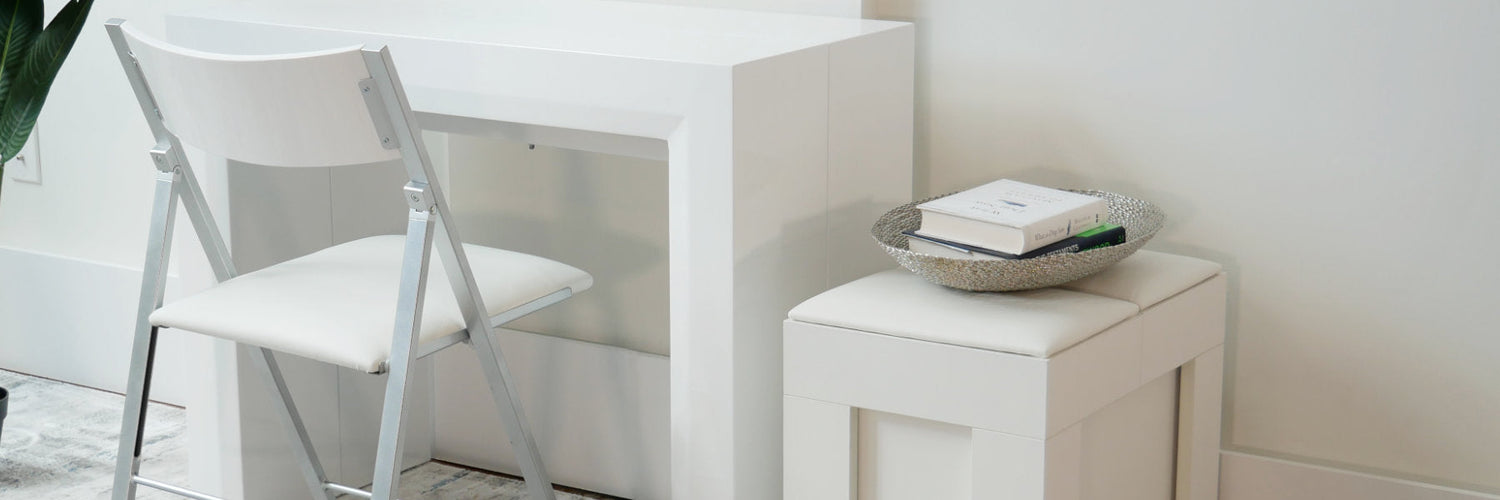
- A dining table and row of chairs running parallel to a wall or window creates long, low lines that emphasize the room’s width.
- A platform or lift storage bed with a long headboard stretching across the wall grounds the room, visually expands the space and creates a calm environment perfect for rest and relaxation.
- Low credenzas or sideboards in a room anchor your eye and guide it outwards, making a room feel more spacious and balanced.
Vertical Lines
Vertical lines lead your eye upwards to draw attention to the height of a space. This is why rooms with tall bookcases, floor-to-ceiling curtains, or high-backed furniture feel more open and airy. Since our brains associate verticality with strength and stability, vertical lines imply sophistication.
In open floor plans, vertical lines define distinct zones without adding any barriers. For example, a row of pendant lights above a kitchen island or tall shelving between a living and dining area separate those spaces.
Here’s how vertical lines influence a room through the furniture used:
- A pair of tall floor lamps placed on either side of a sofa or console creates symmetry, draws the eye upward, and emphasizes the room’s height while adding a touch of elegance.
- A four-poster or canopy bed adds height to a bedroom as its vertical posts lead the eye toward the ceiling making the space feel taller, more sophisticated, and visually anchored.
- High-backed chairs or barstools pull the eye upward with their tall silhouettes, creating rhythm that conveys formality.
- Vertical slat wall panels or narrow shelving units that extend from floor to ceiling elongate the walls and make small or low ceiling rooms feel taller.
Diagonal Lines
Unlike horizontal lines or vertical lines, diagonal lines look like they’re in motion, as if they’re about to fall or shift. By pulling your gaze toward a focal point or deeper into the space, diagonal lines create movement and visual interest. Because the eye naturally follows diagonal lines, they break up monotony in square or rectangular rooms, create depth and draw attention to focal points like artwork, windows, or furniture.
In open layouts, diagonal lines prevent the space from feeling flat and draw attention toward focal points like a fireplace, island, or statement wall. Angled furniture arrangements, patterned flooring like herringbone or chevron, and sloped ceilings all create diagonal flow that leads your eye that pulls your gaze forward and inward to make you feel like the space extends farther than it actually does.
Diagonal lines can be created through furniture shapes and arrangements like:
- A sectional couch placed diagonally in a corner draws the eye toward the fireplace or media wall, adding movement and energy that make the space feel more dynamic and inviting.
- Accent chairs placed at an angle next to a coffee table draw attention toward the seating area, creating a diagonal flow that encourages conversation and adds energy and movement to your layout.
- Floating shelves or wall art hung at a subtle diagonal guides your gaze upward or towards a focal point which adds rhythm and balance to the design to the room.
Curved Lines
Curved lines bring softness and rhythm to a room, guiding your eye through gentle, flowing movements. Since our brains naturally connect curves with shapes found in nature, they create a sense of comfort, calm, and harmony.
In an open floor plan, curved lines add comfort by creating a sense of balance. Rounded furniture including extending tables in round and oval shapes, and circular rugs help unify these large spaces, making them feel more cohesive and inviting.
In non-open floor plans, curved lines soften sharp angles and create a softer, more inviting atmosphere. In narrow spaces, they guide your eye through smooth, sweeping movements instead of straight lines, adding to the flow of the room.
There is no shortage of furniture options in round shapes:
- Rounded sofas and crescent-shaped sectionals guide people toward each other which creates a welcoming and relaxed flow.
- Circular or oval coffee tables break up the sharp edges of rectangular furniture, guiding the eye gently through the space and creating a smooth, balanced flow.
- Curved armchairs or barrel chairs with rounded backs and soft edges add visual softness and comfort, making seating areas feel cozy, intimate, and welcoming.
- An arched headboard or canopy frame adds elegance and rhythm to a bedroom, guiding your eye upward and creating a sense of height and calmness.
- Circular dining tables, with no sharp corners, encourage connection and conversation while bringing a sense of harmony and inclusivity to a room.
- Curved desks or console tables with rounded edges like our Junior Giant Curve add a sense of motion and softness, adding lightness to the room.
- Rounded cabinet or drawer pulls, with their curved handles and knobs, add a softer aesthetic that reinforces comfort and continuity throughout the space.
Leading lines are one of the most effective ways to shape how people see, experience, and move through a room. Whether in an open floor plan or a more traditional layout, these lines create visual flow, balance, and depth. And now you’re ready to use them to create flow, balance, and the right experience for a room based on its purpose.